
Progress Comes in Leaps
Why daily effort in chess often stays invisible—until it suddenly clicks

Progress Doesn’t Look Like Progress
It can be hard to really track progress in games like chess. Improvement often doesn’t come steadily, but in leaps. You can train like a champ, or more accurately, train like a GM, for days, weeks, even months, and it feels like nothing improves. Then suddenly, one day, there is a jump forward.
That is exactly what I am seeing with my older daughter.
One Simple Rule: Do Something Every Day
We haven’t been training consistently for very long, but we made one rule: do something useful every day, no matter how long or short. Just do something. At the same time, it has taken me, as her parent, some time to figure out what that something should be, and how much is enough to help her improve while keeping her interest in chess.
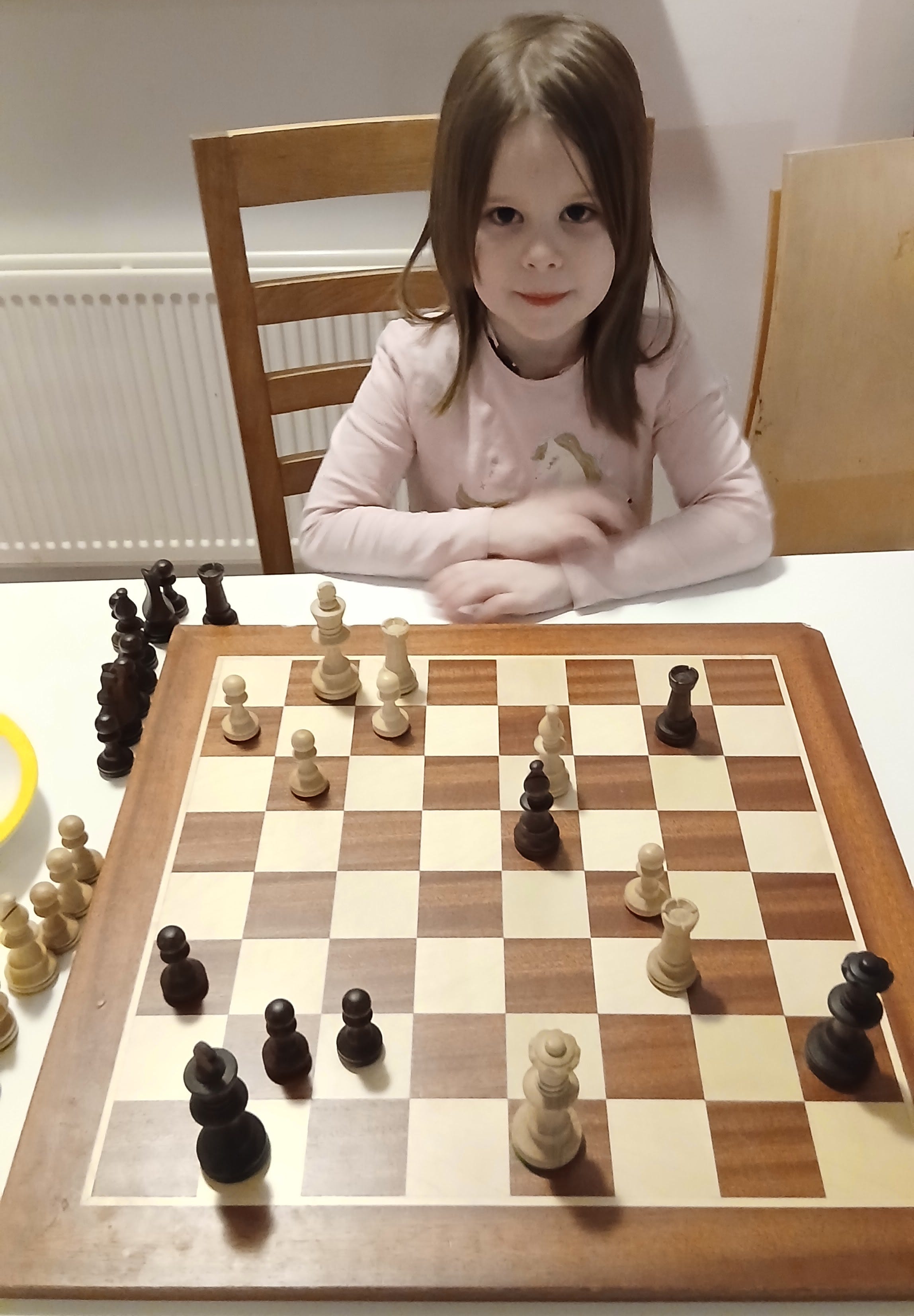
We don’t necessarily play a game every day, but we make sure to train every day.
When Easy Becomes Boring
Last time I wrote, we were mostly doing mate in 1, 2, and 3 on ChessTempo. We used small, looped sets of very easy puzzles to start with. Lately though, she started to get bored and complained that it was too easy.
So I changed the approach and aimed for her actual rating level in mate in 1, 2, and 3. At first, she was overwhelmed when she saw that the loop now contained around 65,000 puzzles instead of the 15–20 she was used to.
I had to take time to explain that she didn’t need to solve all of them. The computer simply selects puzzles that are not too easy and not too hard. Even then, she complained that mate-in-one puzzles were still too easy.
From Guessing to Calculating
In mate-in-two, my task as a parent became very clear: I had to make her sit on her hands, literally, and explain the moves out loud before touching a piece. I wanted to force her to calculate, to think through options instead of rushing. It’s hard for her, but it’s working. At this stage, sitting and calculating beats cramming puzzles.
And I started to see improvement quickly.
Our Colors of Chess
We usually do “yellow chess” in the morning when she wakes up, meaning ChessTempo, because of its yellow theme. In the afternoon, after kindergarten, we sometimes do “blue chess,” which is Chessable. But the most fun for her, I would say, is “book chess,” and we usually end the day with that. We are doing the book: Chess: 5334 Problems, Combinations and Games
I have also made some other fun games myself, mostly with a pink color theme, so we call that “pink chess.”
Each type of chess has its own side games and little behaviors that I need to follow as a parent to keep her engaged.
The Leap Shows Itself
What I clearly see now is that improvement really does come in leaps. I can see it in her puzzle solving and in how she calculates longer lines. Sometimes she doesn’t choose the shortest path to checkmate, but she still gets there in the end.
A Moment That Made Me Smile
I was especially happy during one of our games. Often when we play, I set up positions where she has a chance to checkmate me. We play almost all our games over the board, but in one position, instead of the obvious Qf2+, she surprised me with Ne2+. After the game, she said: “I calculated Ne2+, Rxe2, Qf1#.” That made me very happy. The practice is working.
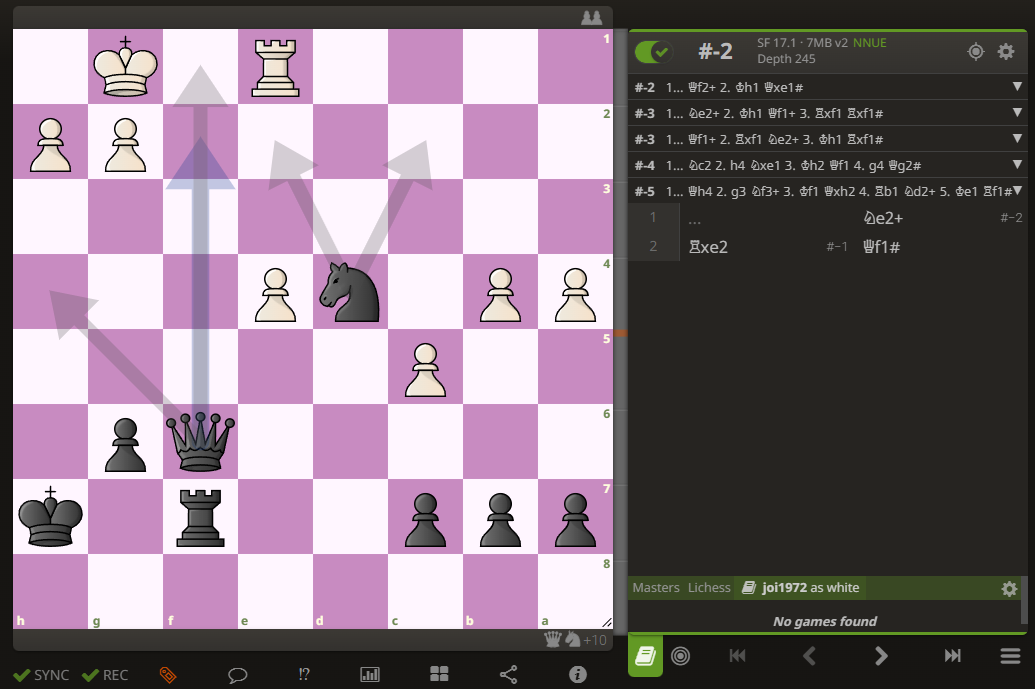
It is not always the shortest way.
In another game, she waited until I moved my queen away from the back rank before striking with her queen, knowing her bishop was covering the escape square. A simple mate like that was impossible for her just four weeks ago.
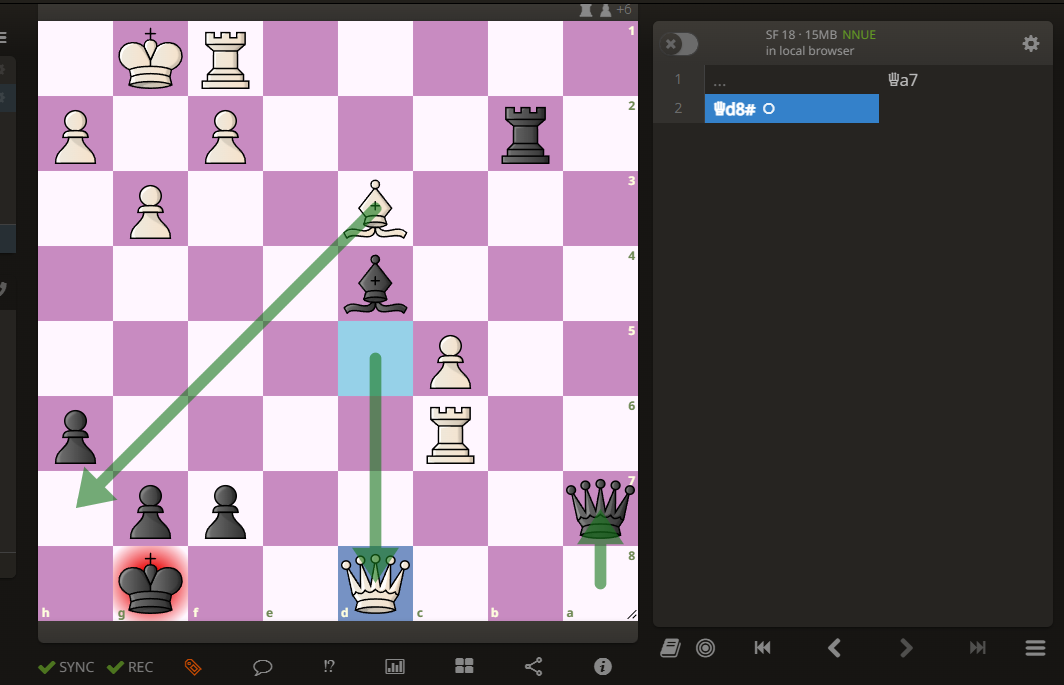
I was so happy when she did this, especially since I wasn’t paying attention to it myself.
Patterns Before Understanding
At the end, I want to show a puzzle that demonstrates how creative she has become. Or maybe it’s memory, I’m not 100% sure. I vaguely remember showing her this trick only once a few weeks ago. Either way, it didn’t take her long to solve it: giving check on the rook so she could safely promote to a queen. Again, one of those sudden leaps that shows we are on the right path.
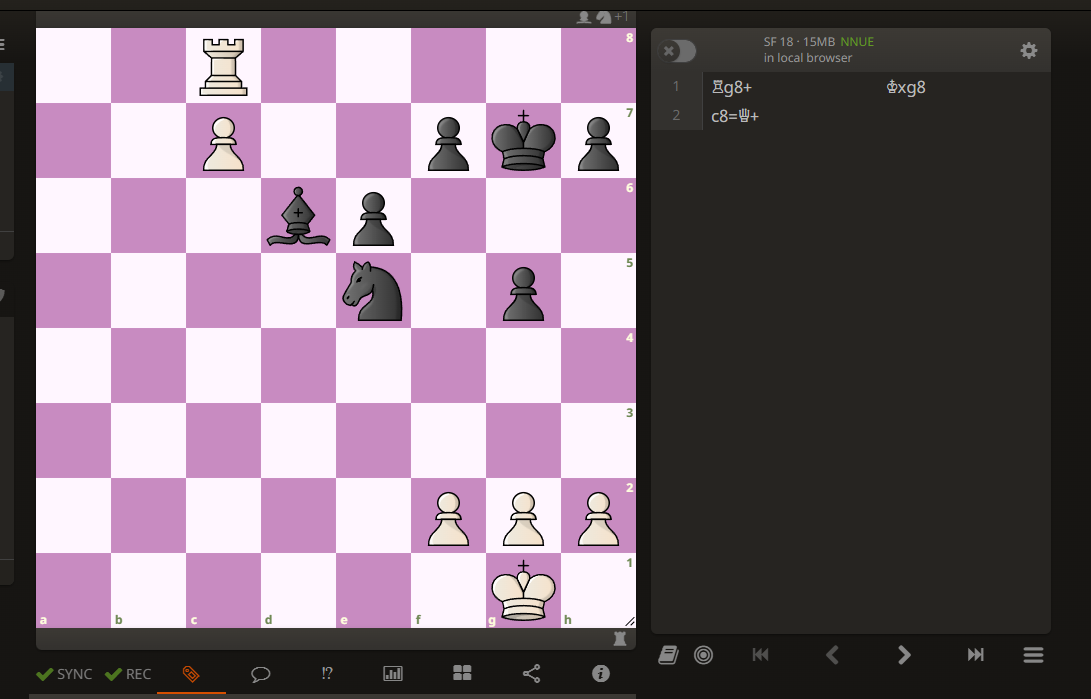
On the right path
My younger daughter mostly does simple back-rank mates almost every day. She doesn’t fully understand what checkmate is yet, but when that understanding comes, she will already have all the patterns in her memory. I can’t force understanding. It will come with passion, and at the right moment, when her understanding itself makes a leap forward.